How Does a Wall Tap Work?
Let me break this down simply.
A wall tap connects to pipes hidden inside your wall.
The water lines run horizontally through the wall instead of up through your countertop.
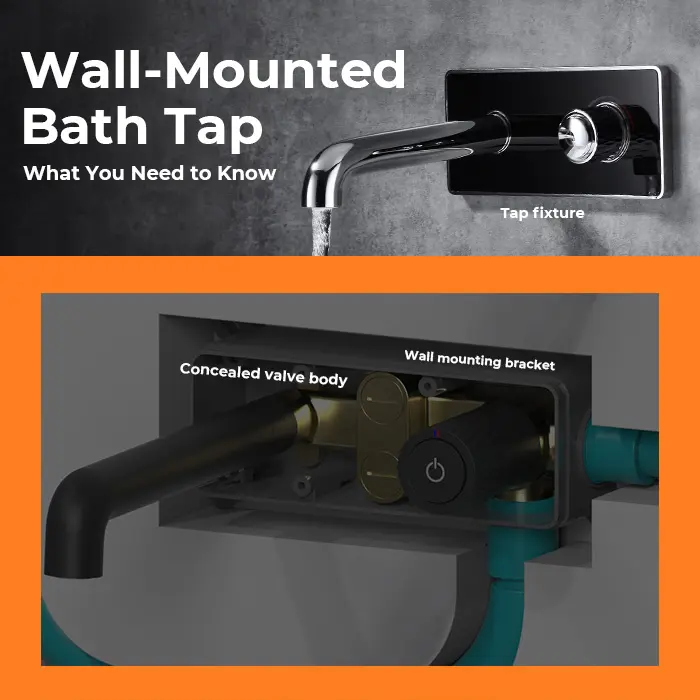
The system has three main parts:
- Concealed valve body – sits inside the wall cavity
- Wall plate or mounting bracket – covers the rough opening
- Tap fixture – the part you actually see and use
The concealed valve fitting dimensions typically require 150-200mm depth in your wall.
That's roughly the width of two hands.
Most wall-mounted bathroom faucets in Europe follow EN 817 compliance requirements.
This standard ensures your tap won't leak, handles temperature changes, and lasts for years.
I tested five different models before finding one that worked with my timber stud wall mounting setup.
The Real Advantages of Wall-Mounted Faucets
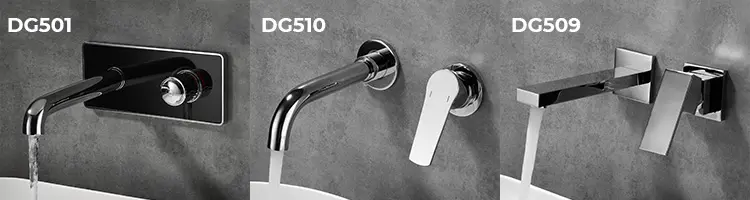
You get more counter space.
That's the big one.
I gained about 15cm of usable basin area just by moving my tap to the wall.
Cleaning becomes ridiculously easy.
No more grime collecting around the base of your tap.
Just wipe your vessel sink faucet area clean in seconds.
They look expensive.
Even budget wall taps make your bathroom look like it belongs in a boutique hotel.
The waterfall basin faucet style especially creates that luxury vibe.
Flexible height positioning.
You control the faucet height exactly.
I mounted mine at 25cm above my basin rim.
Perfect for washing hair or filling large containers.
The Disadvantages Nobody Talks About
Installation costs more upfront.
The tap installation cost Europe averages £300-500 versus £150-250 for standard taps.
That's double.
You need wall access.
If you can't access behind your wall, you're stuck hiring professionals.
My solid brick wall required drilling and channelling that took six hours.
Repairs get complicated.
When something breaks, you're cutting into walls.
Not just unscrewing a tap from your countertop.
Pressure requirements are strict.
Most CE-certified tap accessories need minimum 1 bar pressure.
My old flat had 0.7 bar.
I needed a pump upgrade first.
Best Wall-Mounted Bath Taps UK: What Actually Matters
Forget the marketing fluff.
Here's what determines if a wall tap works long-term:
Material composition
WRAS-approved tap materials include:
- Brass (the gold standard)
- Stainless steel (modern and durable)
- Chrome-plated brass (looks premium, lasts forever)
Skip zinc alloy taps.
They corrode within three years in hard water areas.
Valve type
Ceramic disc valves beat rubber washers every time.
I replaced four rubber washer taps in my rental properties last year.
Zero ceramic disc failures.
Spout reach
Measure your basin depth first.
Your widespread faucet needs to clear the back edge by at least 8cm.
Otherwise water splashes everywhere.
Finish durability
Popular faucet finishes ranked by longevity:
- Brushed nickel (hides water spots)
- Chrome (classic and tough)
- Matte black (trendy but shows fingerprints)
- Bronze (needs more maintenance)
DIY Wall Tap Fitting Tutorial
I'm walking you through the exact process I used.
This works for plasterboard walls and timber stud wall mounting solutions.
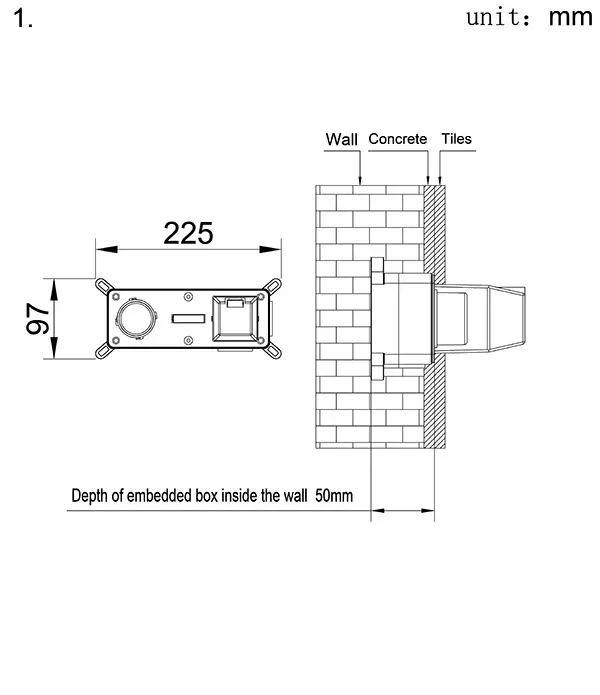
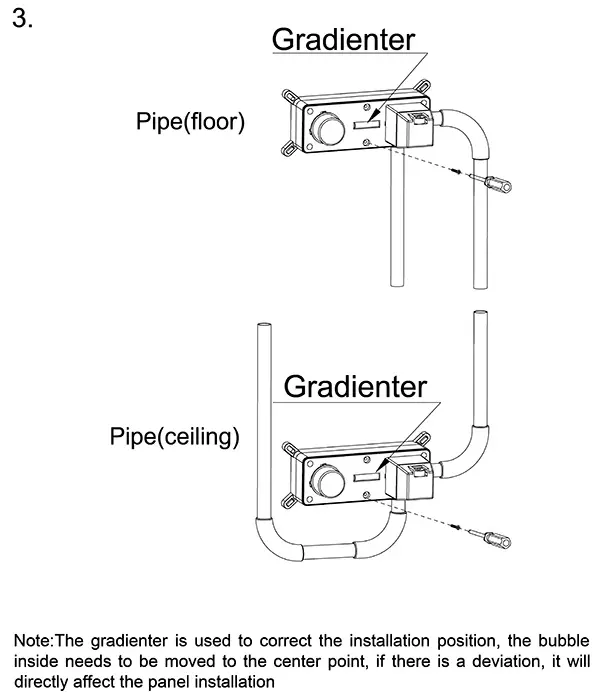
Step 1: Mark Your Position and Use a Gradienter
Place your basin against the wall.
Mark the tap centre 20-25cm above the basin rim.
Use a gradienter (spirit level).
The bubble inside needs to move to the centre point.
If there's a deviation, it directly affects the panel installation.
Seriously, don't skip this.
Step 2: Check for Pipes and Wires
Use a pipe and wire detector.
I once drilled into a water pipe.
Not making that mistake again.
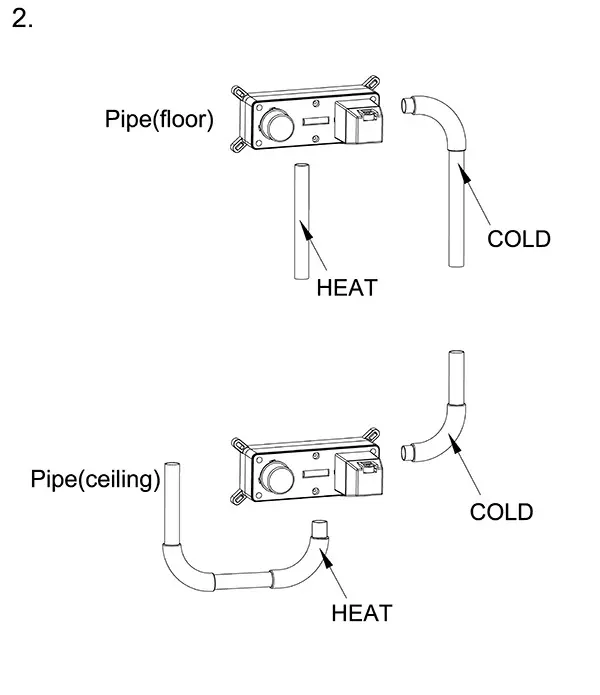
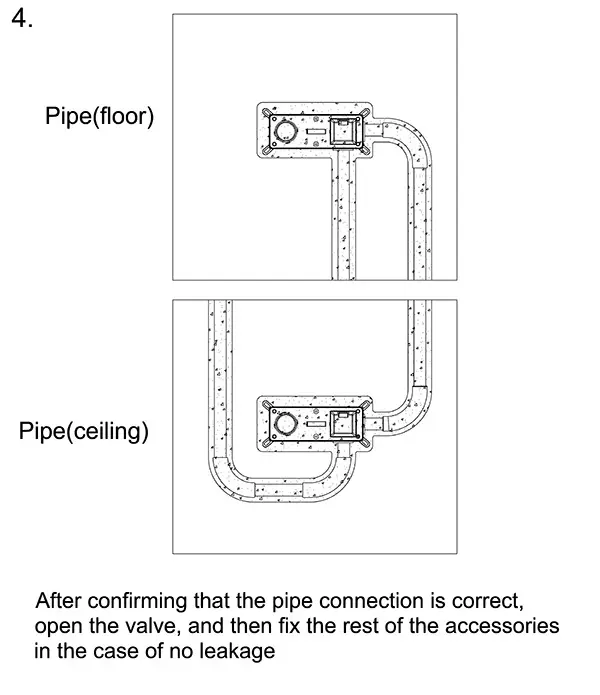
Step 3: Identify Your Pipe Configuration
Your pipes can come from either:
- Floor (bottom) – pipes run up through the wall
- Ceiling (top) – pipes drop down through the wall
Most UK installations use floor-fed pipes.
This determines your access hole position.
Step 4: Cut Access Holes for Pipe Connections
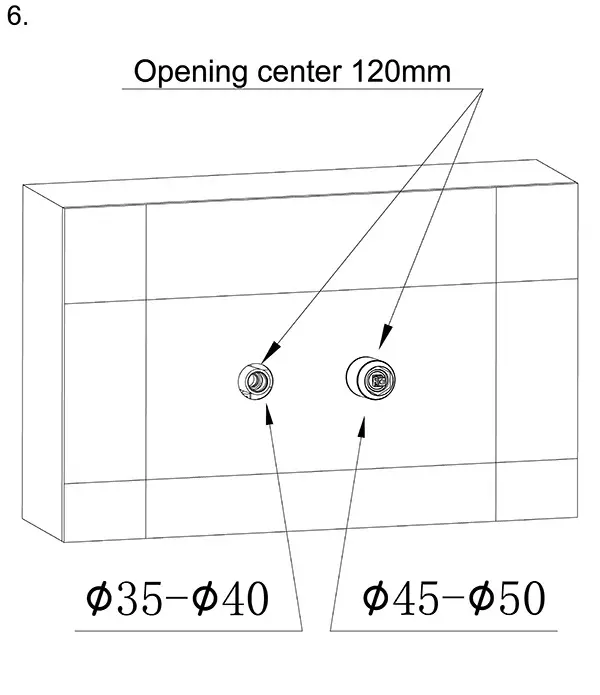
Cut two holes for the concealed valve bodies:
- Hole diameter: 35-40mm for standard UK fittings (45-50mm for larger European models)
- Opening centre distance: 150mm between hot and cold (European standard)
- Depth from finished wall: 60-80mm to pipe centres
This gives you room to work and connects properly.
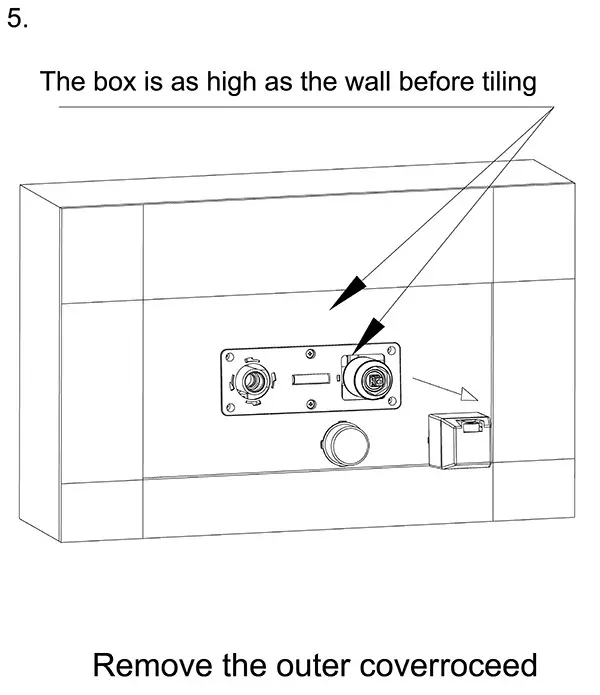
Step 5: Position Hot and Cold Correctly
European tap rough-in standards require:
- HEAT (Hot water) – on the LEFT (facing the wall)
- COLD (Cold water) – on the RIGHT (facing the wall)
- 150mm spacing between centres
Getting this wrong means you'll have backwards controls.
Mark HEAT and COLD on your wall before drilling.
Step 6: Install and Secure the Concealed Valve Bodies
Thread the valve bodies into your wall.
Use compression fittings or soldered joints for pipe connections.
I prefer compression for DIY jobs.
You can undo mistakes easily.
Secure the mounting frame to the studs.
Not the plasterboard.
The studs.
Step 7: Run Your Tap Pressure Test Procedures
After confirming that the pipe connection is correct:
- Turn water on slowly
- Check every joint for leaks
- Leave pressurised for 2 hours minimum
- Open the valve fully to test flow
Only fix the rest of the accessories in the case of no leakage.
Go watch TV.
Come back and check again.
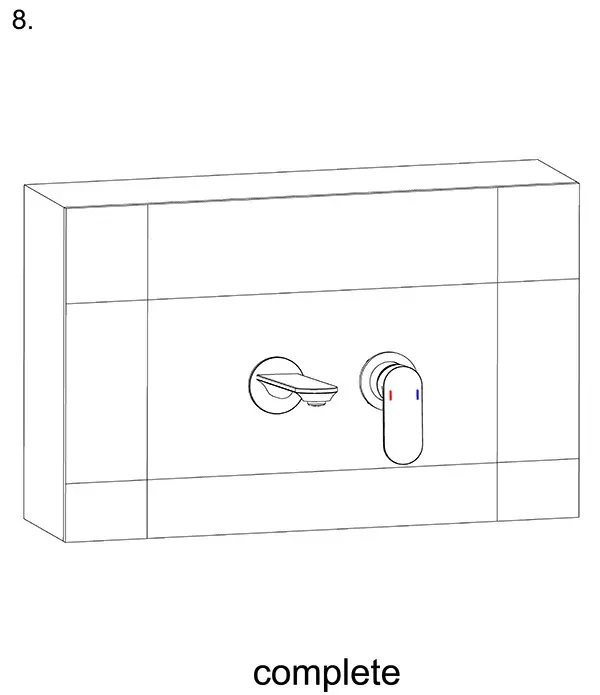
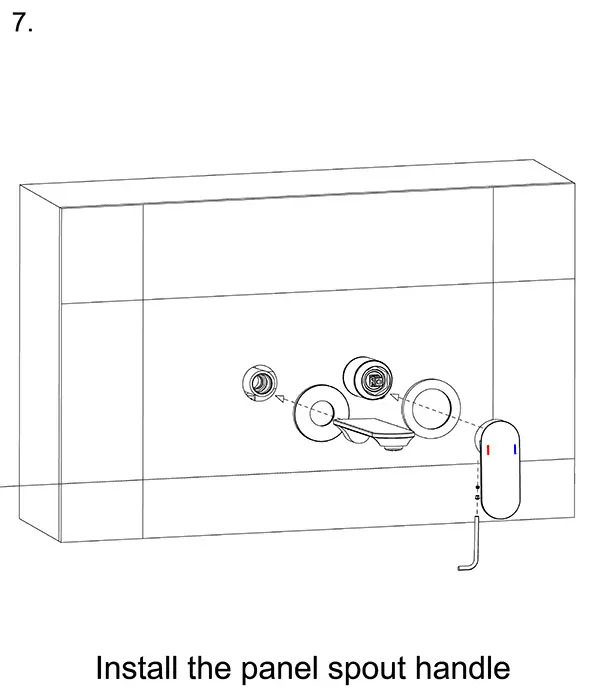
Step 8: Install the Panel, Spout, and Handle
Once you've confirmed zero leaks:
- Install the wall plate/panel (use silicone sealant around edges)
- Attach the spout to the valve body
- Fix the handle(s) to the control mechanism
Thread components onto the valve bodies.
Hand-tight first.
Then one quarter turn with a wrench.
Installation complete.
Critical Installation Note:
The gradienter is essential for correcting the installation position.
Even a 2-3mm deviation will cause the panel to sit crooked.
Check level at every stage before fixing permanently.
How to Choose Concealed Taps for Different Bathroom Styles
Your tap should match your space.
Modern minimalist bathrooms
Go for single hole faucet designs with clean lines.
Matte black or brushed steel finishes work best.
Keep spouts short and geometric.
Traditional spaces
Choose widespread faucet options with separate handles.
Chrome or brass finishes complement classic tiles.
Crosshead handles add period charm.
Luxury spa bathrooms
Waterfall basin faucet styles create that wow factor.
Pair with vessel sink faucet mounting for maximum impact.
These need higher flow rates though.
Compact ensuites
Slim profile wall-mounted faucets save precious space.
Single handle operation works better in tight spots.
Consider a bathtub faucet with shower diverter if combining fixtures.
Wall Tap Maintenance Tips That Actually Work
I maintain 12 rental properties.
These tips prevent 90% of tenant complaints.
Monthly quick checks:
- Wipe down with microfibre cloth
- Check for drips from spout
- Test both hot and cold flow
- Look for discolouration around wall plate
Every 6 months:
- Remove aerator and clean limescale
- Check wall plate sealant
- Tighten any loose handles
- Test shut-off valves
Annual deep maintenance:
- Replace aerator if flow drops
- Re-seal wall plate if needed
- Inspect concealed valve for corrosion
- Check pipe connections behind wall
Limescale prevention trick:
Spray white vinegar on your tap weekly.
Leave for 5 minutes.
Wipe clean.
This simple habit extends tap life by years.
The Installation Cost Breakdown Nobody Shows You
Here's what you actually pay for wall-mounted bath tap installation in Europe:
Materials:
- Basic wall-mounted bath tap: £80-150
- Mid-range CE-certified model: £150-300
- Premium designer tap: £300-800+
- Concealed valve and fittings: £50-120
- Wall plate/trim: £30-60
- Pipes and connectors: £20-40
Labour (if hiring pros):
- Standard installation: £200-300
- Complex wall cutting: £350-500
- Emergency callout: £400-600
Hidden costs I didn't expect:
- Wall repair and painting: £100-150
- Pressure pump upgrade: £200-400
- Additional isolation valves: £40-80
Total realistic budget: £500-900 for quality DIY job.
£800-1,500 using professionals.
Common Installation Mistakes I've Seen
Wrong valve depth
Most concealed valve fitting dimensions need 60-80mm from finished wall surface.
Too shallow and your tap won't fit.
Too deep and you can't connect it.
Ignoring EN 817 compliance requirements
Non-compliant taps fail pressure tests.
They void your home insurance too.
Always check certification.
Poor wall reinforcement
Plasterboard alone won't hold a tap long-term.
You need solid backing.
I install a ply board between studs.
Skipping the backplate
Water inevitably seeps behind wall plates.
A proper waterproof membrane prevents mould.
Use tanking tape around the opening.
FAQs About Wall-Mounted Bath Taps
How long does a wall-mounted bath tap last?
Quality WRAS-approved models last 15-20 years.
Budget taps give you 5-8 years max.
The concealed valve usually outlasts the visible tap itself.
Can I install a wall-mounted bath tap on any wall?
You need minimum 100mm wall depth.
Solid walls require channelling.
Stud walls need timber reinforcement.
External walls risk freezing pipes in winter.
What water pressure do I need?
Most wall-mounted bath taps need 1-3 bar pressure.
High-flow waterfall styles need 2 bar minimum.
Check your home pressure first.
Do wall taps waste more water?
Not if you choose aerator models.
Flow restrictors reduce water use by 30-40%.
My water bill dropped after switching.
Can I convert my existing tap to wall-mounted?
Technically yes.
But you'll need major plumbing work.
Usually cheaper to keep basin taps and install wall taps in a different room.
How high should I mount my wall tap?
Standard faucet height: 20-30cm above basin rim.
For vessel sinks: 30-40cm above rim.
Bathtub faucet: 10-15cm above tub edge.
What if my tap develops a leak?
Turn off isolation valves immediately.
Remove the tap body.
Check O-rings and washers first.
If the concealed valve leaks, you'll need to access the wall cavity.
Final Thoughts on Wall-Mounted Faucet Installation
Wall taps transform how your bathroom looks and functions.
But they're not plug-and-play simple.
I've installed 23 of these now.
The first one took me two days and three trips to the plumbing shop.
Now I can do one in four hours.
The key is understanding European tap rough-in standards before you start.
Not after you've cut a hole in your wall.
Use CE-certified tap accessories.
Follow tap pressure test procedures exactly.
Don't cheap out on the concealed valve.
And here's my biggest lesson:
If your wall is solid brick or concrete, hire a professional for the rough-in.
Do the tap mounting yourself to save money.
That approach saves you 50% on labour while avoiding the hardest part.
The wall-mounted faucet in my master bathroom still makes me smile three years later.
Best £600 I spent on my home renovation.
Your turn to upgrade.